
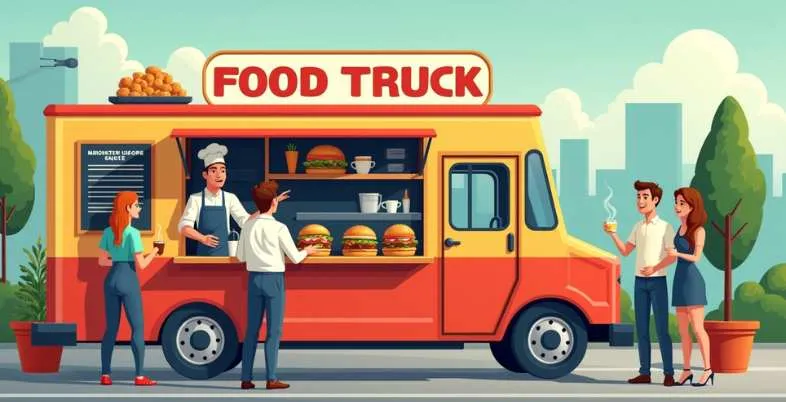
Do you dream of owning your own food company without the big overhead of a traditional restaurant? Being an entrepreneur may be the ideal way to start a food truck business. The food trucks have gained great popularity in the United States and globally, offering a low-cost, flexible entry into the world of cuisine.
You can take your love of cooking in tacos, fine burgers, or fancy desserts with you in a food truck, to hungry clients, at any time, any place, and with significantly less risk than an actual restaurant. It is the ultimate newcomer handbook for 2026.
What Is a Food Truck Business?
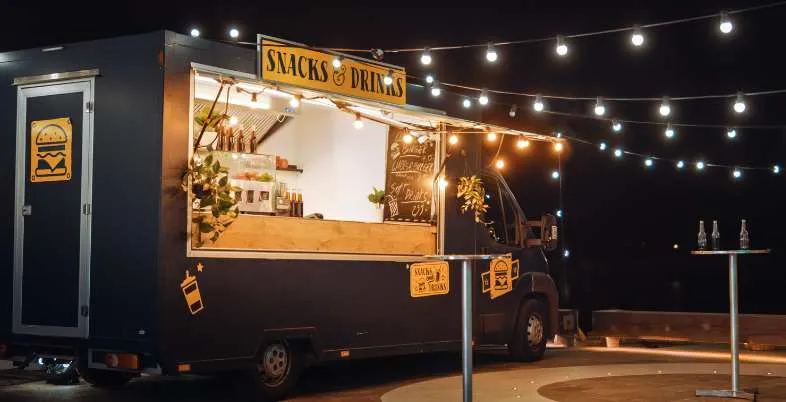
A food truck business is a mobile food-service enterprise operated from a purpose-built truck. In contrast to a regular restaurant, a food truck can be located in various places, i. e., working at events, festivals, markets, and peppy street corners. When one decides on how to start a food truck business then it is important to comprehend that it is a blend of culinary and hustle entrepreneurship.
You cook, serve, and sell food to customers from your truck, keeping overheads down and building a stable following. It is an active, thrilling business model that has sent passionate cooks across the country into the ranks of millionaires.
Is It Worth It to Start a Food Truck?
Of course, however, it is vital to have clear expectations. There are six major points as to why a food truck is a great idea and an uncomplicated and fulfilling business venture:
- Less startup requirements than a restaurant – you can start at $ 20,000 to $100,000, where a sit-down restaurant would require an outlay of $ 250,000 or more, and is achievable by first-time entrepreneurs who may have minimal capital.
- Flexibility and freedom- you work when you want, where you want, and what you want in a menu that provides the degree of control that is very difficult to have in a franchise or a restaurant.
- Expanding industry – the food truck sector in the U.S. is valued at more than $2 billion and is steadily growing, with high demand at corporate events, on campuses, and at food festivals.
- Inbuilt marketing – an eye-catching and well-branded truck is, in essence, a moving billboard that advertises your business wherever it goes.
- Possibility of testing the market – food trucks are a great business idea to prove a restaurant concept before investing a substantial amount in a brick-and-mortar restaurant.
- The community and culture – food trucks are popular with clients and can become a symbol of a community and are an excellent chance to have a true fan base with the ardent fans.
How Much Money Does It Cost to Start a Food Truck?
The initial question that would come to mind of the would-be-owner in learning how to start a food truck business is about startup costs. The follow-up is a realistic and detailed breakdown:
- Purchase of used food trucks: $20,000-50,000- used food truck in decent condition; new custom-made truck may cost a range of 75,000-200,000 or more regarding size and features.
- Food truck equipment/outfitting: $10 000 to $ 30 000 for commercial-grade cooking gear, refrigeration systems, generators, and interior upfitting, if you have purchased a bare-shell vehicle.
- Licenses and permits: $500- $5,000 depending on your city and state, which includes your business license, food handler permits, health inspection certificates, and parking permits.
- Start-up food and supply capital: This is between 1000 and 5000 to stock your truck up with food, raw materials, packaging, utensils, and cleaning items for the first few weeks of operation.
- Branding, marketing, and website: $500- 3000 to have a logo designed, a professional truck wrap designed, a social media site set up, and the simplest form of website created to get yourself online and gain customer attention.
- Insurance and miscellaneous: $2,000- 5,000 per year on the commercial auto insurance, general liability cover, and the emergency fund to cover any unexpected vehicle repairs and any slow season.
How to Start a Food Truck Business Step-by-Step (2026)
Step 1: Conduct market research
Before you spend a dollar, check out your local food truck market. Determine market weaknesses: which cuisines are underrepresented in your location? What are the areas that house frequent office workers and lack lunch?
Go to competitors, talk to prospective clients, and observe food trends on Instagram and TikTok to identify what ideas are trending upward and what the market really wants.
Step 2: Select a Food Truck Concept
Select a niche that you are passionately engaged in and one that would address an identifiable void that exists in the market. A concept of yours must be narrow, catchy, and easy to convey: tacos, BBQ, Thai street, vegan bowls, gourmet grilled cheese, or artisan coffee.
With a clear, concise menu, it is easier to run efficiently and quickly, less wasteful of food, and, most importantly, enables you to establish a strong brand image on the first day your service window opens.
Step 3: Compose A Food Truck Business Plan
There is no compromise on a good business plan as it helps you become fundable and successful in the long term. You should include your plan, an overview of your idea, an analysis of the target market and the competition, the price strategy you will use, estimated revenue and costs, the marketing strategy, and operational considerations.
The document will also steer you on all major decisions to be made along the way, but will amaze any bank, investor/landlord that you will address regarding the start-up capital or the best locations.
Step 4: Purchase or Lease a Food Truck
Make a decision on whether to purchase new, purchase used or lease a truck. New custom trucks will have maximum reliability plus precise specifications, although their prices will be notably higher in the initial stage. Second-hand trucks are cheaper and might need expensive repairs. Leasing also maintains low initial costs and is best in the case of testing a new idea first before getting fully committed.
Never buy any truck, used or new, without having a good mechanic thoroughly examine it, unfortunately some may stop in the middle of a hectic service day but this will not only ruin your income but also your reputation.
Step 5: Obtain Licenses and Permits
This is one of the most important steps in starting a food truck business. In a vast majority of cases, it is also the most confusing part for a novice. Depending on the city and state requirements, these would include a business license, a food handlers permit, a mobile food vendor license, a health department inspection certificate, parking permits in designated areas, and a fire safety inspection.
Make sure you verify the local city government website or call your county health department to get the full, up-to-date list of requirements before you open.
Step 6: Stock Equipment
Have your truck equipped with commercial-grade equipment that meets your specific menu requirements. It may include a commercial range / flat-top griddle, a deep fryer, stainless steel prep tables, commercial refrigerators and freezers, a propane generator or shore power connection, a code-compliant fire suppression system, a three-compartment sink, a hand-washing station, and a modern point of sale / POS system, which accepts card and contactless customer payments.
Step 7: Select Your Location
Location is all in the food truck world. Next, find high-traffic areas in your city that attract large crowds: business districts during lunchtime, parks and beaches on weekends, venues for different events, college and university campuses, craft breweries, and farmers’ markets. A specific parking permit is required due to designated vending zones in many cities.
Another thing that comes to mind is requesting to serve individual parties, business lunches, weddings, and birthday parties – these are events that have more predictable income and expose you to a multitude of new potential clients.
Step 8: Open and market your food truck
Generate pre- and Post-Grand opening buzz. Choose a great Food Truck Name, make your profiles active on Instagram, Facebook, and TikTok, and share mouthwatering photos and videos of your food being cooked. Promote your whereabouts each day via apps like Street Food Finder or Roaming Hunger.
Provide discounts during the opening week or during sample tastings to attract people. Collaborate with local corporate food bloggers and social media influencers. Gather customer emailing to a regular newsletter.
How to Start a Food Truck Business With No Money — Quick Tips
- Apply for SBA Microloans – The Small Business Administration provides up to 50,000 microloans at low interest rates, making them among the most appropriate grants for first-time food truck entrepreneurs with low or no capital.
- Crowdfund Your Idea — Find sites like Kickstarter or GoFundMe, and ask your local community to support your startup with food vouchers, early access, and other rewards for supporters who recognize your idea.
- Lease Rather than Buy — leasing a food truck costs $800-1500/month rather than the huge cost of buying one vehicle, and as a result, you can begin earning money as soon as you lease, instead of emptying your wallet.
- Get an Angel Investor — Find a silent business partner or angel investor to provide the start-up capital for the business at a reasonable percentage of your future monthly profit.
- Start with a Ghost Kitchen – rent a licensed commercial kitchen by the hour, order directly via the internet, and delivery apps help you get your customer base and cash flow going before investing in a real truck.
- On the one hand, this choice is a way to save money, since acquiring a second-hand food truck and cooking equipment often costs less than $10,000-20,000 to be ready to hit the road.
What Type of Food Truck Is Most Profitable?
Food trucks that serve simple, cost-effective dishes and are popular with a wide audience are considered the most profitable. They are also the most profitable food items to feature in profitability charts, since inexpensive ingredients, low prices, and near-universal popularity make Tacos and Mexican food the most profitable.
BBQ trucks perform outstandingly well at outdoor events and weekend festivals. Coffee and dessert trucks usually command the highest profit margins, up to 2535 percent, since their key input costs are low relative to their sale prices. Vegan and health-conscious trucks are thriving amongst younger urban populations eager and delighted to spend high-end prices on quality.
Food Truck Profit Potential
| Food Truck Type | Avg. Daily Revenue | Monthly Revenue | Profit Margin |
| Tacos / Mexican Food | $1,200–$2,000 | $24,000–$40,000 | 15–20% |
| Burgers & Fries | $1,000–$1,800 | $20,000–$36,000 | 12–18% |
| BBQ / Grilled Meats | $1,500–$2,500 | $30,000–$50,000 | 18–25% |
| Desserts / Ice Cream | $800–$1,500 | $16,000–$30,000 | 20–30% |
| Vegan / Healthy Food | $900–$1,600 | $18,000–$32,000 | 15–22% |
| Coffee & Beverages | $700–$1,200 | $14,000–$24,000 | 25–35% |
| Pizza Truck | $1,000–$1,700 | $20,000–$34,000 | 14–20% |
| Asian Street Food | $1,100–$1,900 | $22,000–$38,000 | 16–22% |
How Many Food Trucks Fail in the First Year?
Knowledge of failure rates is a key factor in starting a food truck business smartly. These are the most important statistics and reasons for the early closures:
- It has been revealed that about 60 percent of food trucks do not last beyond the third year, with many going out of business in the first year due to poor financial planning and insufficient capital to start a business.
- The biggest killer is underestimating costs; most first-time owners have overlooked vehicle repairs, commissary charges, permit renewals, or low winter seasons when determining their break-even point.
- The wrong place has always been one of the leading causes of failure; not even the most tasty food in the world can be sold by a truck that nobody passes by during working days.
- Inadequate marketing and poor brand building result in dangerously low customer awareness of a food truck’s existence – in a crowded, competitive market, invisibility is a death sentence for a young food truck.
- Menu problems: It has menu items that are either too large or too small, which either slow service or cause food to go to waste; too small to allow the new trucks to reach a profitable level within the shortest amount of time.
- Burnout is quite a possibility: the high physical and mental toll of running a one-man food truck operation causes a significant number of enthusiastic owners to have their doors shut even before the business has a chance to get its feet properly into the business world.
Common Mistakes When Starting a Food Truck
The following pitfalls are critical and often cause failure for first-time food truck entrepreneurs:
- By not having a properly drawn- Out business plan, one will have missing goals, no financial forecasts, and no roadmap at all, thus being almost unable to make sound judgmental choices when pressure hits the nail on the head.
- Purchasing an inappropriate truck – Paying more money to buy a truck that appears nice but with severe mechanical issues, or a multi-practical kitchen design, may lead to costly retrofits and never-ending and revenue-losing breakdowns.
- What can happen is ignoring local laws and opening without obtaining the proper permits, then receiving huge fines, being ordered out of business by health department officers, and a ruined reputation in the immediate area.
- Having a menu that is overly complicated and with a lot of items will make your service crawl, add more ingredients, waste, and your kitchen staff, not to mention that it confuses your consumers and leaves it short and narrow.
- Social media neglect is an industry-wide deadly and expensive error in 2026; clients can learn about and track food trucks virtually solely via Instagram, TikTok, and special apps – no solid web presence, and you have literally vanished into thin air.
- It sounds clever to underprice your food to convince people to buy it, but will lead to slow profit destruction in the long term; you have to always price it according to what your actual cost of food, labor, overhead, and the profit you want to make, not what your personal judgement of moral righteousness considers fair.
Tips to Make Your Food Truck Successful
The following are tips, which were proven to be practiced by successful food truck operators in the country:
- Make something that a customer will have no chance of finding anywhere else. It is a signature dish that belongs to your brand, and that is the dish that the customer will highly recommend to their friends, colleagues, and relatives.
- Establish a coherent social media profile and share your location on the daily basis, do that on Instagram and TikTok on a regular and high-quality basis: one of the most successful marketing tools that food truck owners can employ in the current free market is regular and high-quality content on Instagram and Tik Tok.
- Investing in customer service at a level that makes customer service go through with being friendly, fast as well as a fully enthusiastic crew will turn one-time customers to bitter loners who will be visiting the store every week and take with them new faces every time they visit.
- Attending food truck events, festivals, and weekend markets, unlike an outstanding revenue source, it is also the best brand-exposure location to grow your entire customer base exponentially and quickly.
- Be religious with your numbers each week – understand your percentages of food costs, how much you make a day, how much you make as a net, etc. to be able to make moves on pricing, inventory and staffing levels that are informed and smart.
- Establish catering and private event revenues at an early stage – stays the same, predictable revenues such as corporate lunches, weddings, office parties, birthday celebrations give this type of revenue an early and significant peak in the indifferent nature of the slow days and off-peak days.
Pros and Cons of Starting a Food Truck
It is wise to have both sides of the coin before plunging into the full details of starting a food truck business:
PRO:
- Starting a food truck business is ideal for first-time entrepreneurs with limited capital, as it involves much lower startup and operating costs compared to a traditional restaurant.
- Food trucks offer high mobility and flexibility, allowing owners to target busy areas, attend profitable events, and quickly change locations in response to customer demand.
- With increasing demand in 2026, food trucks are gaining popularity as more people prefer convenient, varied, high-quality, and affordable food options in urban settings.
CON:
- The work can be physically demanding, with long hours in a confined kitchen and responsibilities such as inventory management, equipment maintenance, and self-operation.
- Business performance is highly dependent on weather conditions, where extreme heat, heavy rain, or cold spells can significantly reduce foot traffic and revenue.
- Regulatory requirements can be complex, including permits, health inspections, zoning laws, parking restrictions, and commissary rules that vary by location and require additional effort, time, and cost.
Conclusion
Being an aspiring entrepreneur of a food truck company is a fun, thrilling process, full of passion in culinary and some real business enthusiasm and tenacity. A food truck may be with the right idea, a good business strategy, the right permits, and the right place choices, and a constant advertising effort can prove to be both truly profitable and deeply satisfying on a personal level. It will not be smooth all the way up the road, long service days, mechanical headaches, and long unpredictable slow periods will happen, but to those who plan it carefully and remain relentless, the rewards are very much a reality and very much substantial.
The food truck sector will remain so robust in 2026 and creative, passionate, well-brewed new ideas can still flourish. Something you need to do today is to start researching and then send your vision of what the food business should be, you have to define it and then get going on making the food business of your dreams on wheels.
FAQs
What is the cost of starting up a food truck business?
Startup expenses usually come between 20,000 to 100,000 and above depending on whether you are purchasing a new or used acquisition and the quantity of equipment that you are after. It costs between 30000-50000 all inclusive to do a lean start on a good used truck.
What are the requirements of having a license to run a food truck?
Yes. A business license, food handler permit, mobile food vendor license, a health department certificate and parking permits will be required. Different cities and states have different requirements, thus you can never be certain before you open something until you ask your local government first.
What is the profitability rate of a food truck?
A food truck that is managed well will bring in 20,000-50,000.00 in revenue and a profit of 10-25%. In good locations, successful operations are possible with annual net profits of up to 50000-150000 dollars.
Is it possible to open a food truck with no money?
There are other ways to reduce startup costs: leasing a truck, appealing to SBA microloans, crowdfunding your idea or getting a business partner. There are hardly any zero-cost startups, but there are such things as low-cost entry strategies.
What is the most profitable food truck?
Tacos, BBQ trucks, coffee trucks and dessert trucks are always listed as the most profitable ones. Coffee and dessert trucks have the highest margins in profit (25-35%), whereas the BBQ and taco trucks have the largest amount of raw daily revenue.